ARES Neo: Auto-Drawings for BIM Debut in Japan, Next Stop BIMWORLD Munich
- 19/10/2026
- Posted by: Graebert
- Category: FeaturedProduct News
DWG-compatible CAD has long been seen as a mature product, but generative AI, BIM and the cloud are changing what CAD is expected to do. At the ARES BIM Drawing Automation Project Seminar in Japan, Graebert showed how natural-language CAD operation, automatic checking and correction of drawings created from BIM models, cloud processing, and API and MCP integration are moving ARES from a tool people operate to a platform where humans and AI work together. The same approach, led by ARES Neo, comes to Europe next: Robert Gräbert, CTO of Graebert, will present “ARES Neo – Auto-Drawings for BIM” on the main stage at BIMWORLD Munich on November 24, 2026, at 2:55 pm.
At the ARES BIM Drawing Automation Project Seminar, held on September 10, 2026, Graebert highlighted how its ARES DWG-compatible CAD software lineup is undergoing a major transformation through AI, BIM, and cloud technologies. This evolution is enabling new workflows for CAD drawing automation, online drawing creation, and cloud-based processing, while also expanding ARES through APIs, integrations with external software and generative AI, and support for the Model Context Protocol (MCP).

Cédric Desbordes (left), Chief Growth Officer of Graebert, and Yoji Ebata (right), Managing Director of Graebert Japan, presenting Graebert’s AI, BIM and cloud strategy at the ARES BIM Drawing Automation Project Seminar in Japan on September 10, 2026.ging Director of Graebert Japan.
Cédric Desbordes, Chief Growth Officer at Graebert, explained that the objective is not to introduce new technology simply because it is available, but to identify where it can deliver practical and reliable productivity improvements.
In ARES, this takes two complementary forms. AI-assisted CAD functionality helps users when flexibility, guidance or natural-language interaction is useful. ARES AI Assist (A3), for example, can help users select, create and modify drawing entities or generate CAD blocks using natural-language instructions.

Online drawing automation, on the other hand, is designed for repetitive processes where predictable and consistent execution is essential. Examples include converting large numbers of files, publishing drawing sets to PDF on a schedule, generating DWG drawings from Revit or IFC data, and exporting project information at regular intervals.
This distinction is central to Graebert’s approach: AI can help users interact with CAD more naturally, while rule-based automation handles repetitive CAD and BIM workflows reliably and at scale.

ARES Online Drawings Automation moves repetitive CAD and BIM processing tasks to the cloud, where jobs can be run once, scheduled, or repeated automatically. Available workflows include generating DWG and PDF drawings from Revit or IFC models, updating BIM-based drawings, extracting drawing data, comparing DWG files, and converting files between CAD and PDF formats.oor plan open in ARES, with A3 being manipulated. Efficient CAD operations can be performed using natural language.
AI Creates Drawings ARES Neo: AI and BIM Drawing Automation for Revit, IFC and RhinoThat are Easy for Humans to Understand
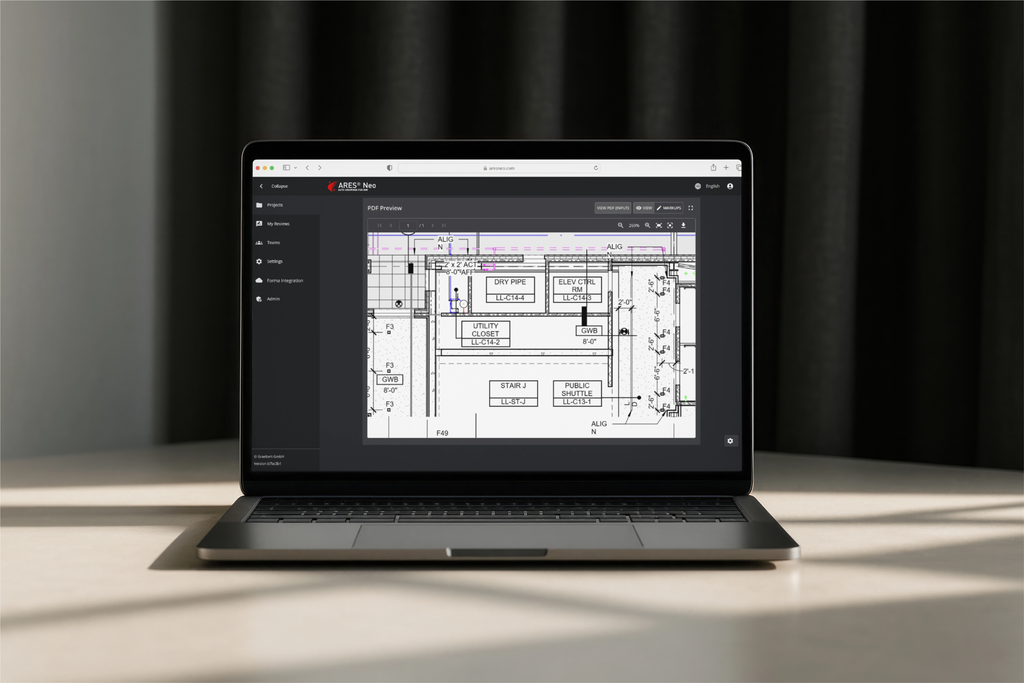
Yoji Ebata, Managing Director of Graebert Japan, also introduced ARES Neo, Graebert’s cloud-based AI and automation solution for BIM documentation.
Even when BIM models are already available, creating and maintaining the associated 2D documentation can require significant manual work. Views and sheets must be created and organized, dimensions and labels maintained, and drawings checked again whenever the BIM model changes.
ARES Neo is designed to reduce this workload by supporting the automation of BIM drawing creation, annotation, review and change management.
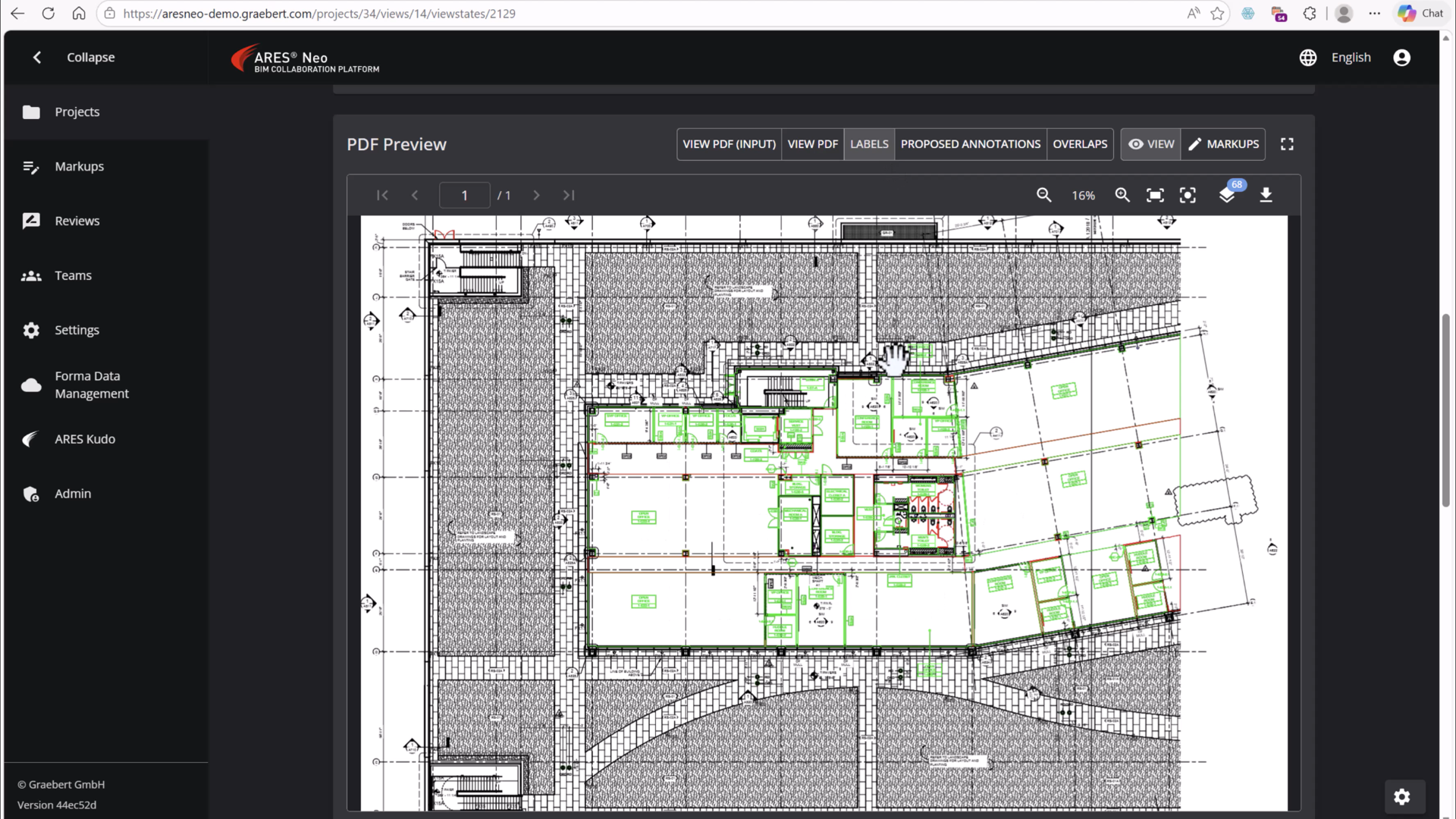
For Revit drawing automation, ARES Neo can work with existing views and sheets while helping standardize dimensions, labels and other documentation according to company requirements. It can also identify readability issues such as overlapping labels and propose improved positions.
The workflow extends beyond drawing generation. ARES Neo can compare BIM information with drawings, highlight differences, support redlines and comments, and present proposed changes for review. The user remains in control, deciding whether a proposed change should be approved and reflected back into the Revit project.
ARES Neo also supports open BIM workflows involving IFC and Rhino, extending BIM drawing automation beyond a single authoring environment.
Industry Perspectives on BIM Drawing Automation
The seminar also featured a keynote presentation from Takenaka Corporation and a panel discussion moderated by construction IT journalist Ryuta Ieiri.
Participants from Takenaka Corporation, BIM Architects, Core Concept Technology and CAPA discussed how BIM documentation workflows may evolve as drawing automation becomes more capable.
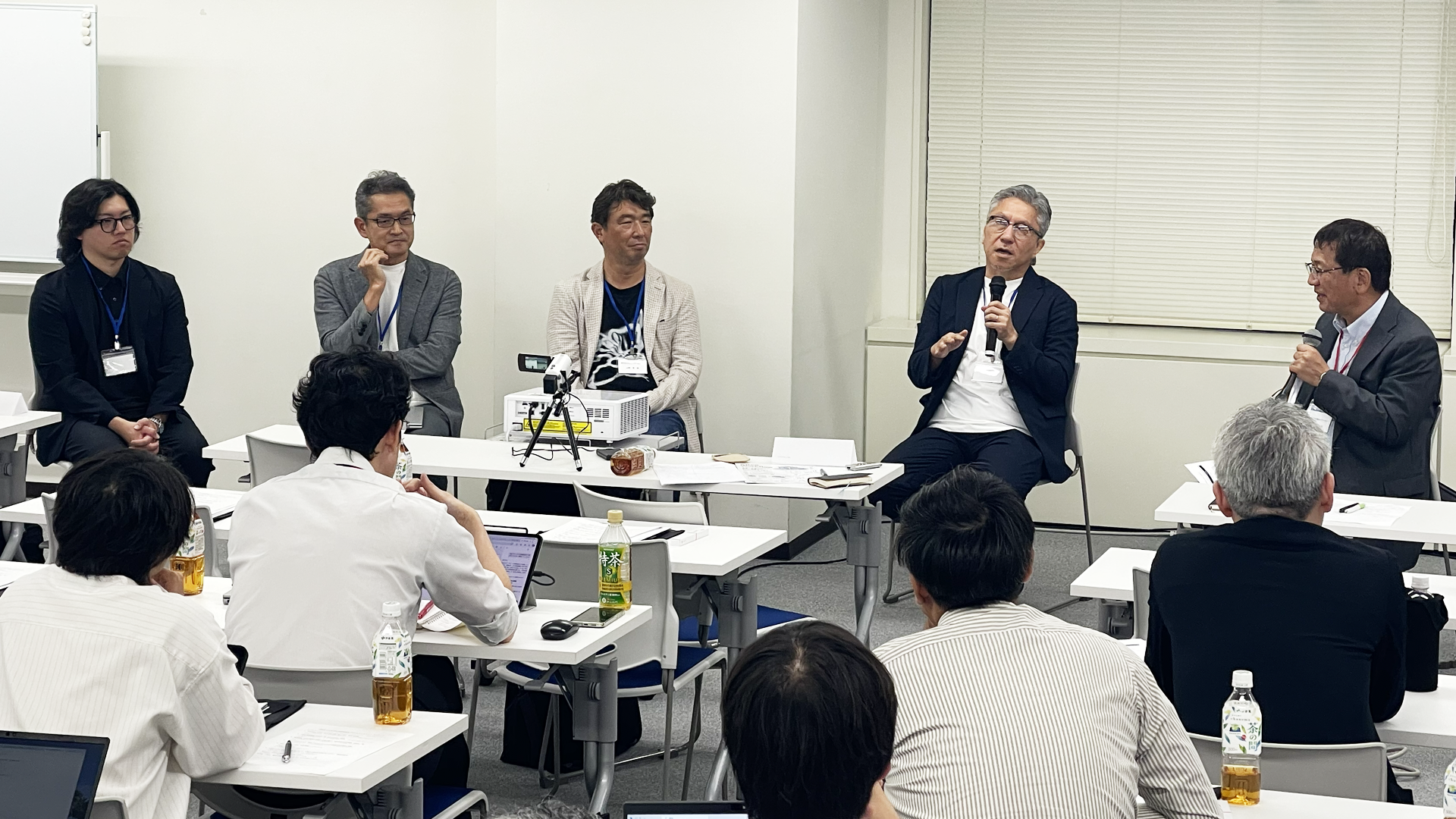
A recurring theme was that automation should not simply reproduce existing manual workflows faster. BIM also creates an opportunity to reconsider how drawings are created, presented and reviewed, while keeping experienced professionals responsible for design intent and final decisions.
Cloud-Based CAD Automation and MCP Connectivity
Graebert also demonstrated how repetitive CAD and BIM drawing processes can be moved away from the user’s desktop and executed in the cloud.
ARES Online Drawings Automation can execute processing tasks on an online server, allowing users to continue working while jobs run in the background. Tasks can also be scheduled or repeated automatically—for example, generating DWG drawings from Revit or IFC models, updating BIM documentation, converting files, or publishing drawing sets to PDF.
At the seminar, Graebert also previewed support for the Model Context Protocol (MCP), enabling compatible generative AI solutions such as Claude or ChatGPT to interact with ARES Commander and execute appropriate CAD actions.
At the seminar, Graebert previewed beta support for the Model Context Protocol (MCP) in ARES Commander. MCP enables compatible generative AI solutions such as Claude, ChatGPT and Gemini to connect with ARES Commander and execute appropriate CAD actions, opening new possibilities for AI-assisted CAD workflows and automation.
Together, AI-assisted CAD, online drawing automation, APIs and MCP connectivity create new possibilities for CAD workflow automation while preserving the reliability required for professional drawing production.
AI Where It Helps, Automation Where Consistency Matters
Graebert’s approach does not rely on AI alone.
Generative AI is useful where interpretation and flexibility are valuable, but the same prompt may not always produce exactly the same result. For CAD and BIM workflows that require predictable and repeatable output, rule-based automation remains essential.
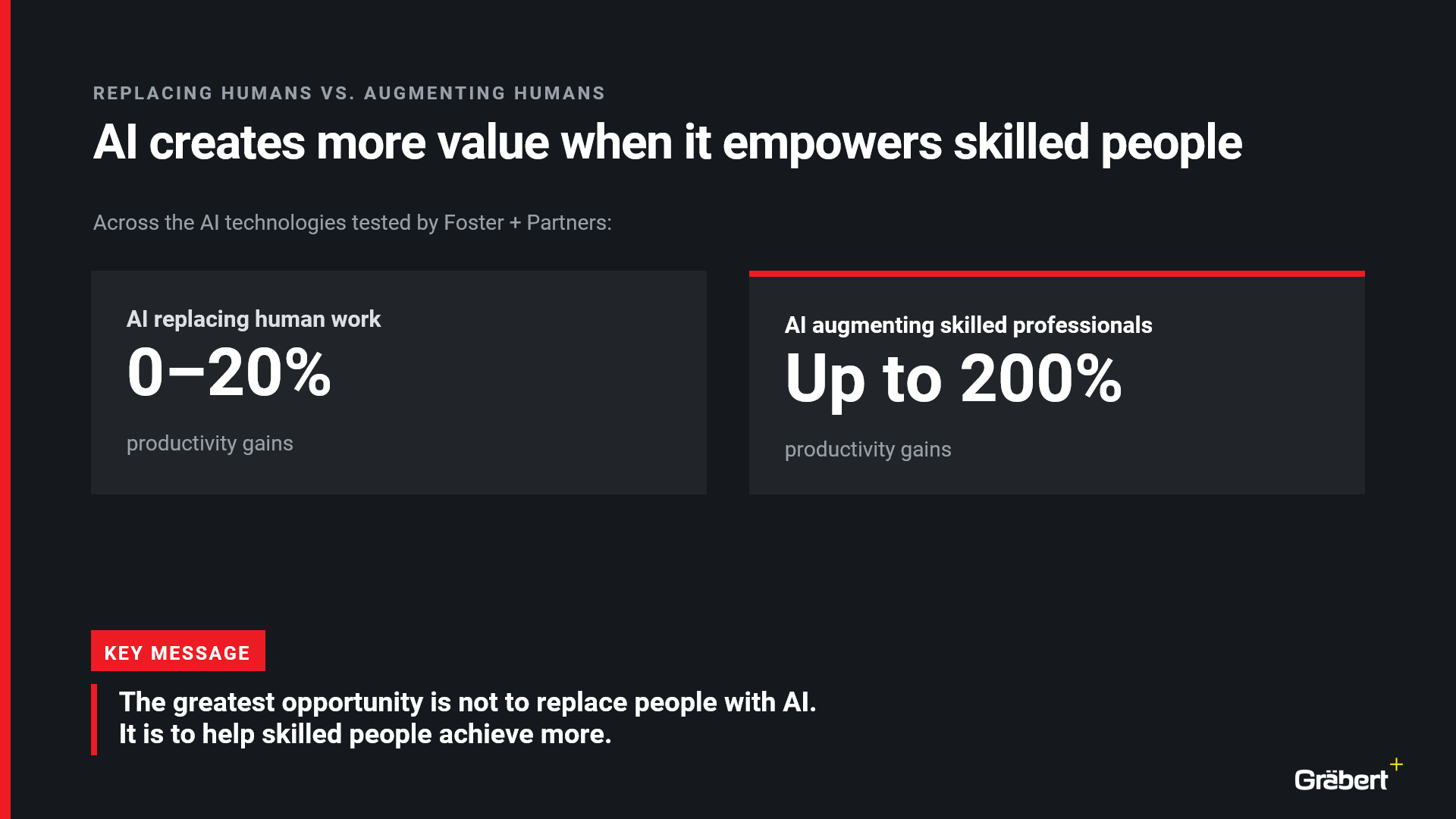
In the seminar presentation, Graebert cited findings presented by Foster + Partners showing a much greater productivity impact when AI is used to augment skilled professionals rather than replace human work. The key message: the strongest opportunity for AI in CAD and BIM is to support experts, reduce repetitive tasks, and help them achieve more.
ARES Neo follows the same principle. Automation can identify issues and propose changes, but the final review and approval remain with the user.
The goal is therefore not to replace skilled professionals with AI, but to reduce repetitive CAD and BIM documentation work so that designers can spend more time on BIM models, design decisions and the quality of the final drawings.
ARES Neo Next Stop: BIMWORLD Munich
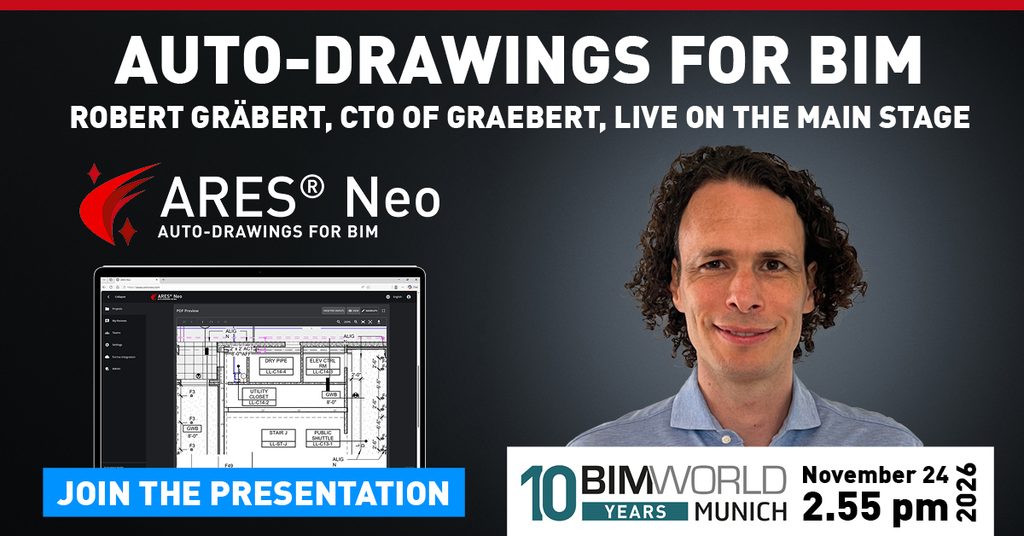
ARES Neo was introduced for the first time in Japan, and the next chance to see it is in Europe. Robert Gräbert, CTO of Graebert, will speak on the main stage (Congress Stage 1) at BIMWORLD Munich on November 24, 2026, at 2:55 pm.
Robert’s talk, “ARES Neo – Auto-Drawings for BIM,” starts from a familiar problem: from drawing creation and annotation to QA/QC, BIM documentation can consume 20% to 40% of project time, and each new model revision can mean up to two weeks of rechecking and validating drawings. Using real-world examples, he will show what happens when annotation and review are moved outside Revit and other BIM authoring tools and run at scale across projects with thousands of drawings. The session also covers where this approach works well, where real project conditions challenge automation, and what Graebert is improving next, including cross-view verification and the balance between company-wide standards and project-specific exceptions.